What Is the Process for a Commercial Roof Replacement in Tampa, FL?
Learn the step-by-step process for commercial roof replacement in Tampa, FL. From inspection to installation, discover what to expect & how to plan ahead!
When a business owner or property manager realizes their existing roof system is failing, the question of replacement quickly follows: what exactly does this massive undertaking involve? The process for a commercial roof replacement in Tampa, FL, is a systematic, multi-phase project that typically spans from initial assessment and material selection to permitting, demolition, installation, and final inspection. Given the unique challenges posed by the Gulf Coast climate, selecting an experienced contractor who adheres strictly to the Florida Building Code is the first and most critical step in protecting your investment and ensuring business continuity, which is why working with a proven partner in Tampa Commercial Roofing is essential.
A successful reroofing project is far more complex than simply swapping old materials for new ones; it is a meticulous construction process designed to safeguard the building envelope for decades. This guide breaks down the full lifecycle of a commercial reroof, providing clarity on everything from the crucial preparatory steps to the final sign-off, ensuring you are fully informed throughout this vital maintenance cycle for your commercial property.
Why is Commercial Roof Replacement in Tampa, FL, a Critical Investment?
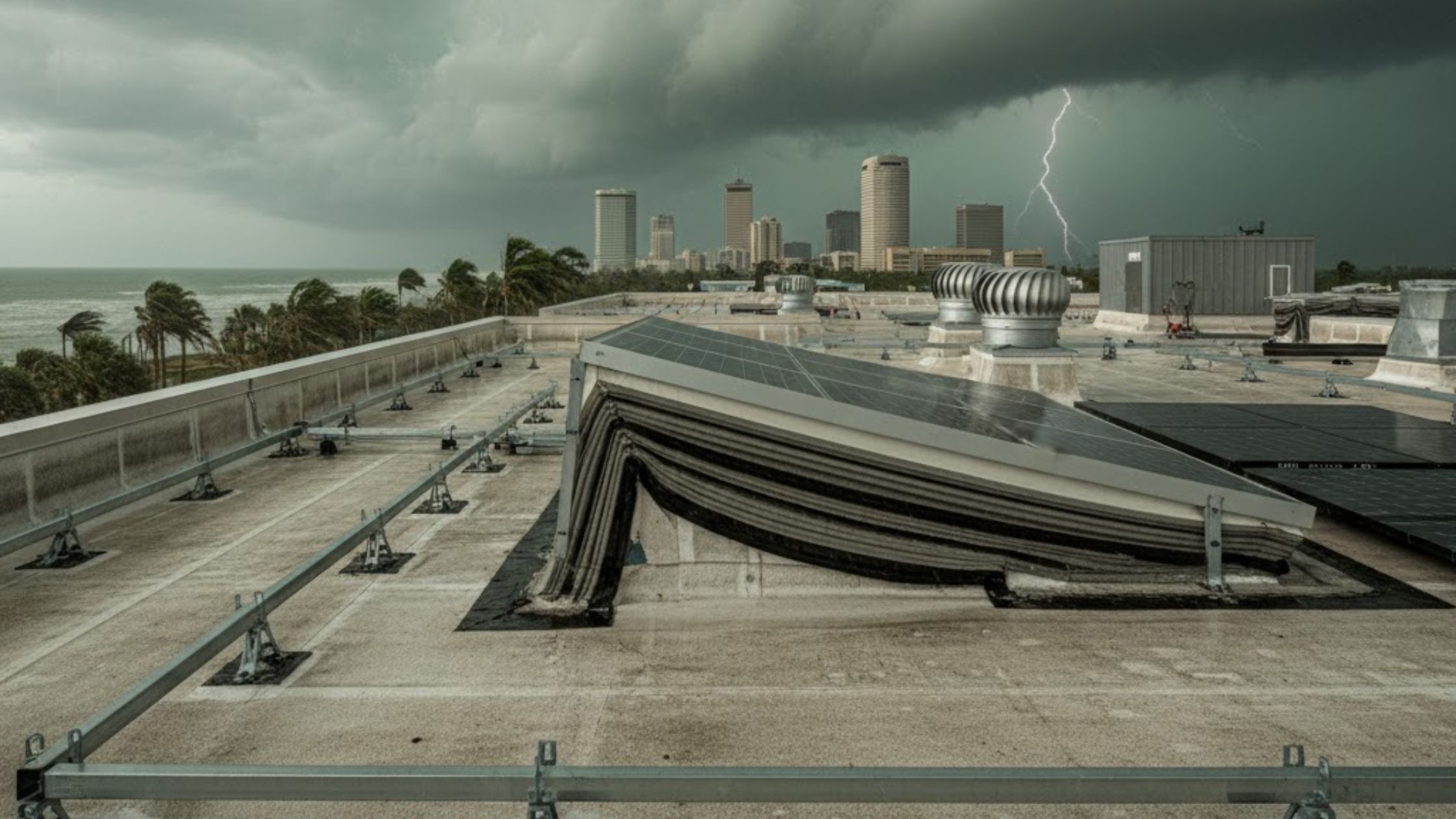
A commercial roof is a major structural component that protects a building's most valuable assets: inventory, equipment, sensitive electronics, and the people inside. Ignoring signs of degradation, such as persistent leaks, blistering, or ponding water, can lead to exponentially higher costs in the future, including structural damage, mold growth, and business interruption. Proactive replacement is a strategic investment in the longevity and operational efficiency of your facility, particularly in a high-wind zone like Tampa.
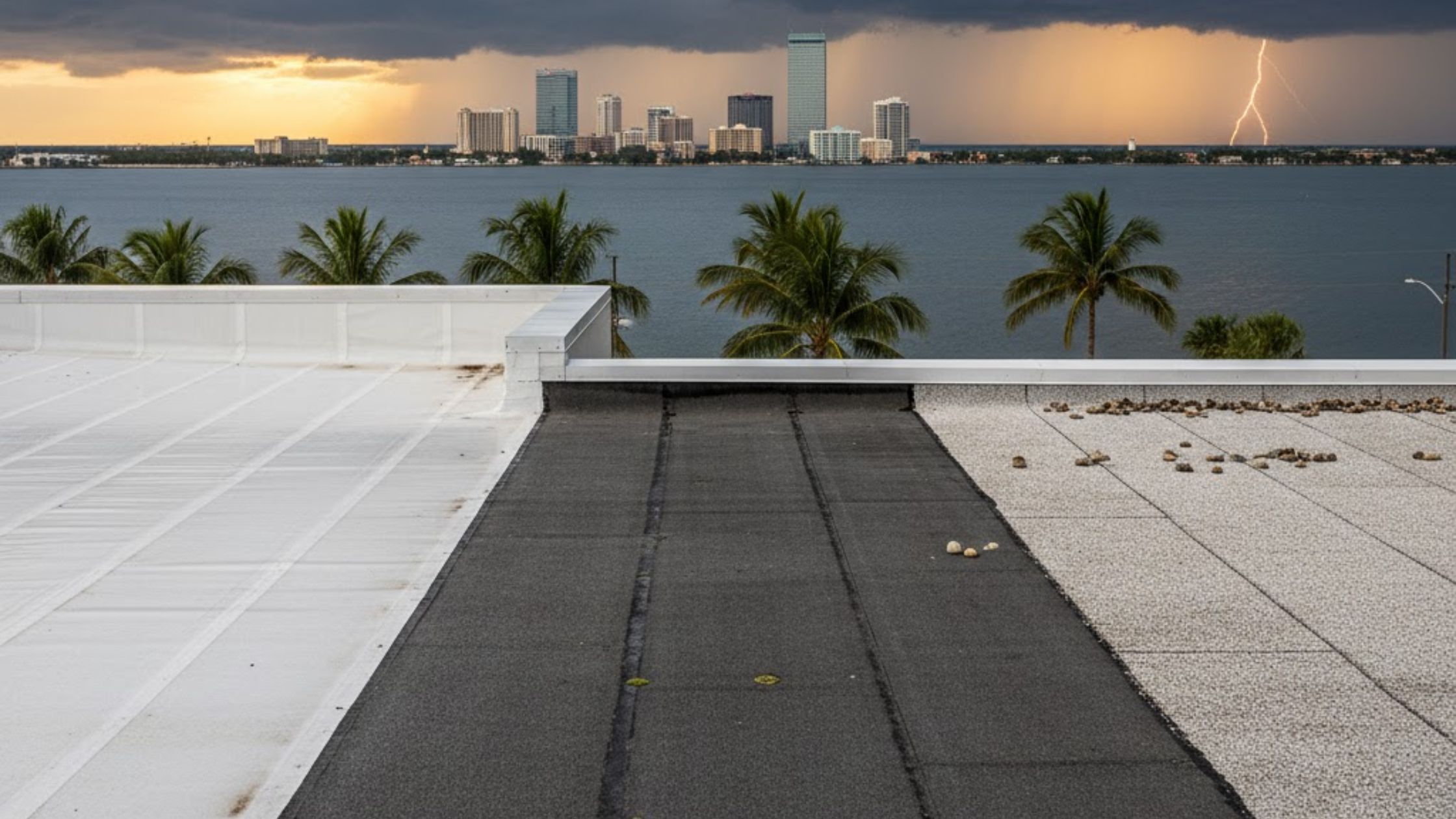
The decision to replace a commercial roof is usually driven by several interconnected factors, none more significant than the age and condition of the existing system. Most commercial roofing systems, such as Built-Up Roofing (BUR) or Modified Bitumen, have a finite lifespan, often between 15 and 25 years. Once a roof reaches the latter half of its expected life, repairs become less cost-effective, and replacement offers a better return on investment.
Recognizing the Telltale Signs of Failure
Understanding when a roof has reached the end of its functional life is key to avoiding an emergency scenario that could force a shutdown. A professional inspection will confirm the status, but property managers can look for several common indicators of imminent failure in their existing roofing system.
- Widespread Leaking and Water Intrusion: While small leaks can often be repaired, multiple, recurring leaks that appear across the roof surface indicate that the membrane or waterproofing layer has failed comprehensively.
- Membrane Damage: For single-ply systems like TPO and PVC, look for cracks, punctures, excessive wear at seams, or widespread blistering, which are pockets of trapped moisture or air that compromise the material's integrity.
- Severe Granule Loss: On modified bitumen or asphalt-based systems, excessive loss of the protective granules exposes the underlying material to damaging ultraviolet (UV) radiation, leading to accelerated deterioration.
- Sagging or Deck Deterioration: Any visible dips or structural deflection in the roof deck itself signals a severe problem, likely due to prolonged water saturation, which may necessitate an extensive deck replacement during the reroof.
- High Energy Costs: A failing roof system often means failing insulation, resulting in poor thermal performance and higher utility bills as conditioned air escapes and external heat penetrates the building.
The Essential Phases of the Commercial Reroof Process
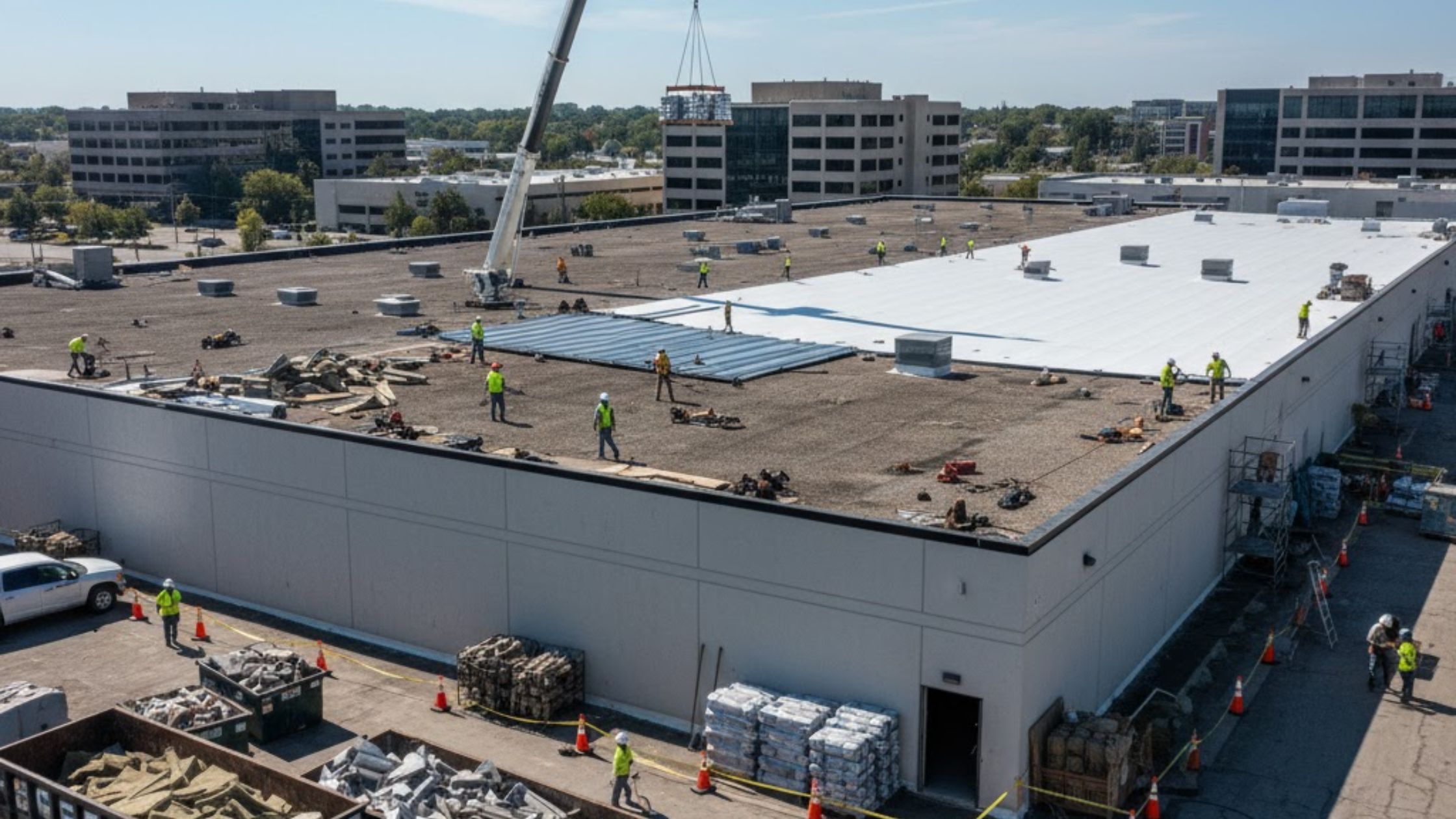
The journey of replacing a Tampa Commercial Roofing system can be broken down into eight distinct phases, each requiring specialized attention and strict adherence to safety and building standards. The total flat roof replacement timeline varies significantly based on the roof’s size, complexity, and the type of materials selected, ranging from a few weeks for smaller buildings to several months for large industrial facilities.
Phase 1: Comprehensive Roof Inspection and Consultation
The first step is a detailed evaluation by a certified roofing professional. This initial inspection goes beyond a simple visual check; it involves assessing the core components of the current system, including the membrane, insulation, deck, flashing, and drainage.
- Infrared Thermography: Advanced contractors often use thermal imaging to detect hidden moisture trapped beneath the membrane and insulation. This is crucial because wet insulation loses its R-value and contributes to deck decay, requiring total removal.
- Core Sampling: This involves taking small physical cuts of the roof layers down to the deck. Analyzing the core reveals the system's precise composition, layer thickness, and moisture content, informing the scope of work.
- Detailed Assessment Report: The contractor compiles a report outlining the roof’s remaining service life, identifying all defects, recommending the appropriate replacement system, and determining whether a full roof tear off Tampa is necessary.
Phase 2: System Selection and Formal Proposal
Based on the inspection, the contractor will present material options tailored to your building’s needs and budget. Commercial roofs in Florida often utilize single-ply membranes (TPO or PVC) for low-slope applications due to their longevity, reflectivity, and heat-welded seams, or metal roofing for steeper pitches due to its durability.
The formal proposal will clearly outline:
- The scope of work, including tear-off procedures and material disposal.
- The recommended roofing system (e.g., 60-mil TPO or Modified Bitumen).
- Specific details on flashing, insulation R-value, and necessary structural repairs.
- The projected cost, payment schedule, and warranty details.
- A preliminary project schedule, including the estimated commercial reroof process FL duration.
Phase 3: Contract Finalization and Permitting
Once the contract is signed, the project moves into the administrative and planning stage. Securing the necessary permits from Hillsborough County or the City of Tampa is a non-negotiable step that ensures the work adheres to the latest standards.
- Florida Building Code (FBC) Compliance: All commercial reroofs in Florida, especially in wind-prone areas, must comply with the FBC, which often dictates higher standards for fasteners, deck attachment, and wind uplift resistance.
- Permit Application: The contractor is responsible for submitting architectural drawings, material specifications, and wind uplift calculations to the local building department. This process can take several weeks, depending on the municipality's workload.
- Pre-Construction Meeting: A meeting between the property owner, contractor, and key personnel is held to discuss site logistics, safety protocols, material staging, and any specific requirements to avoid disrupting daily business operations. We encourage all clients to review our portfolio of past commercial projects to see our commitment to professional execution.
Understanding the Roof Tear Off Tampa Phase and Structural Assessment
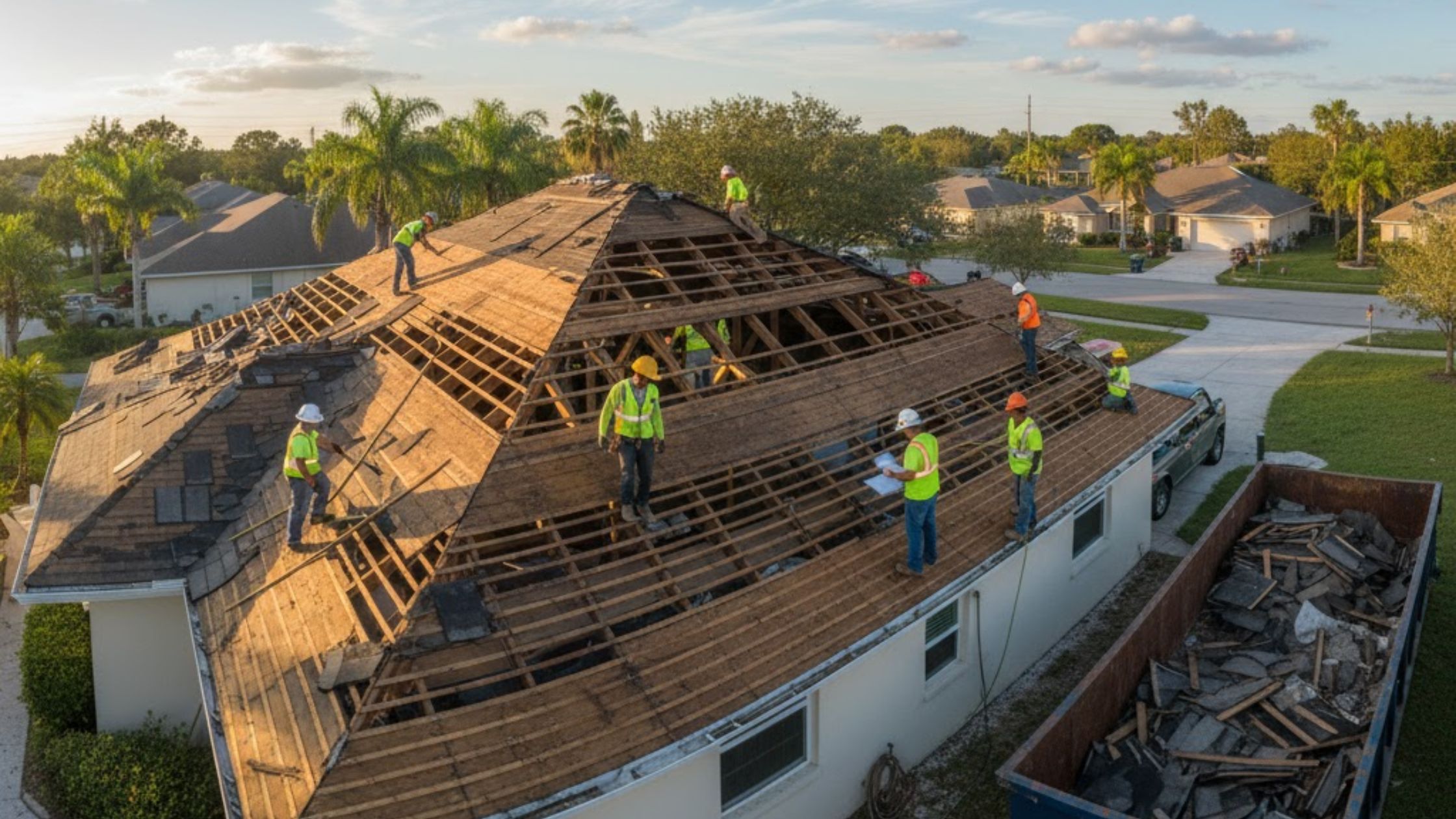
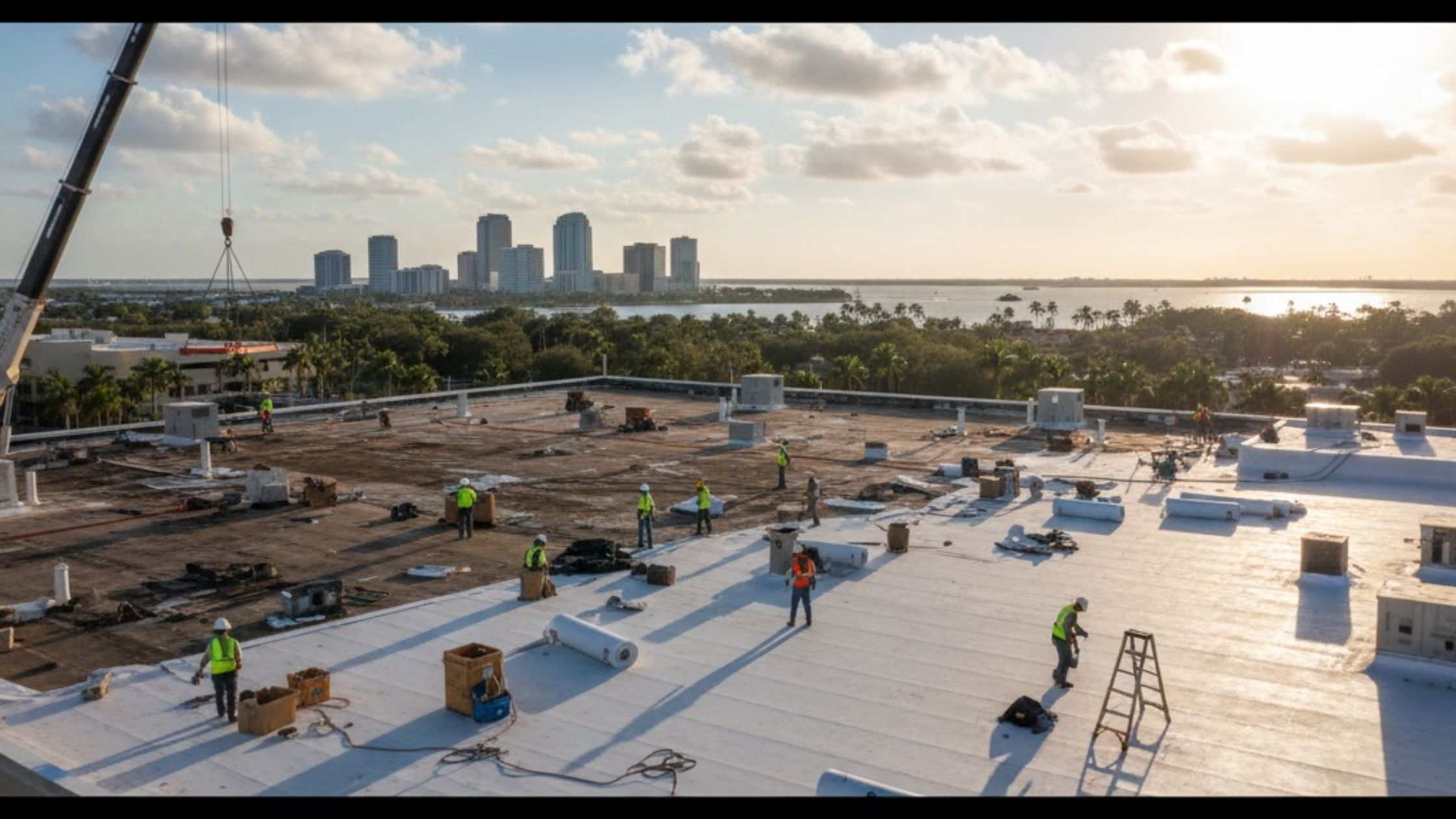
The physical removal of the old roof, known as the roof tear off Tampa phase, is the most labor-intensive and potentially disruptive step of the entire replacement project. This phase determines the integrity of the underlying structure and is critical for ensuring a flawless foundation for the new system.
Executing the Demolition and Debris Management
The demolition crew carefully removes all existing roofing layers, right down to the structural deck. This removal process must be handled efficiently and safely, given the volume of heavy debris involved.
- Controlled Removal: Materials are systematically cut, peeled back, and loaded directly into large containers or trash chutes, often via crane or specialized equipment, minimizing ground-level scattering.
- Environmental Responsibility: Roofing debris, which often includes layers of asphalt, gravel, and wood, must be properly disposed of in accordance with environmental regulations. Responsible contractors prioritize recycling of materials where possible, such as old metal or clean insulation boards.
- Protecting the Building Interior: Throughout the tear-off, crews must ensure the interior of the commercial property is protected. This involves using temporary plastic sheeting, safety barriers, and scheduling work to avoid high-traffic areas during critical business hours.
Decking Repair and Structural Integrity Check
Once the old material is completely stripped, the bare roof deck is exposed and undergoes a full structural assessment. In Tampa’s moist climate, water intrusion often causes localized rot or deterioration in the deck materials (typically plywood, wood plank, or concrete).
- Identifying Deficiencies: Damaged sections of the deck, which may have been hidden by the old roof layers, are identified. Common issues include soft spots, water damage around penetrations, or deterioration near drainage points.
- Necessary Replacements: Any compromised decking material must be fully removed and replaced with new, compliant wood or structural panels. Replacing the deck is non-negotiable, as the new roofing system's warranty depends on a solid, compliant substrate.
- Fastening Preparation: This stage also includes ensuring the deck is properly prepared for the new system's fasteners, especially crucial for achieving the required wind uplift resistance ratings mandated by the local jurisdiction.
Choosing the Right System: Materials Tailored for the Florida Climate
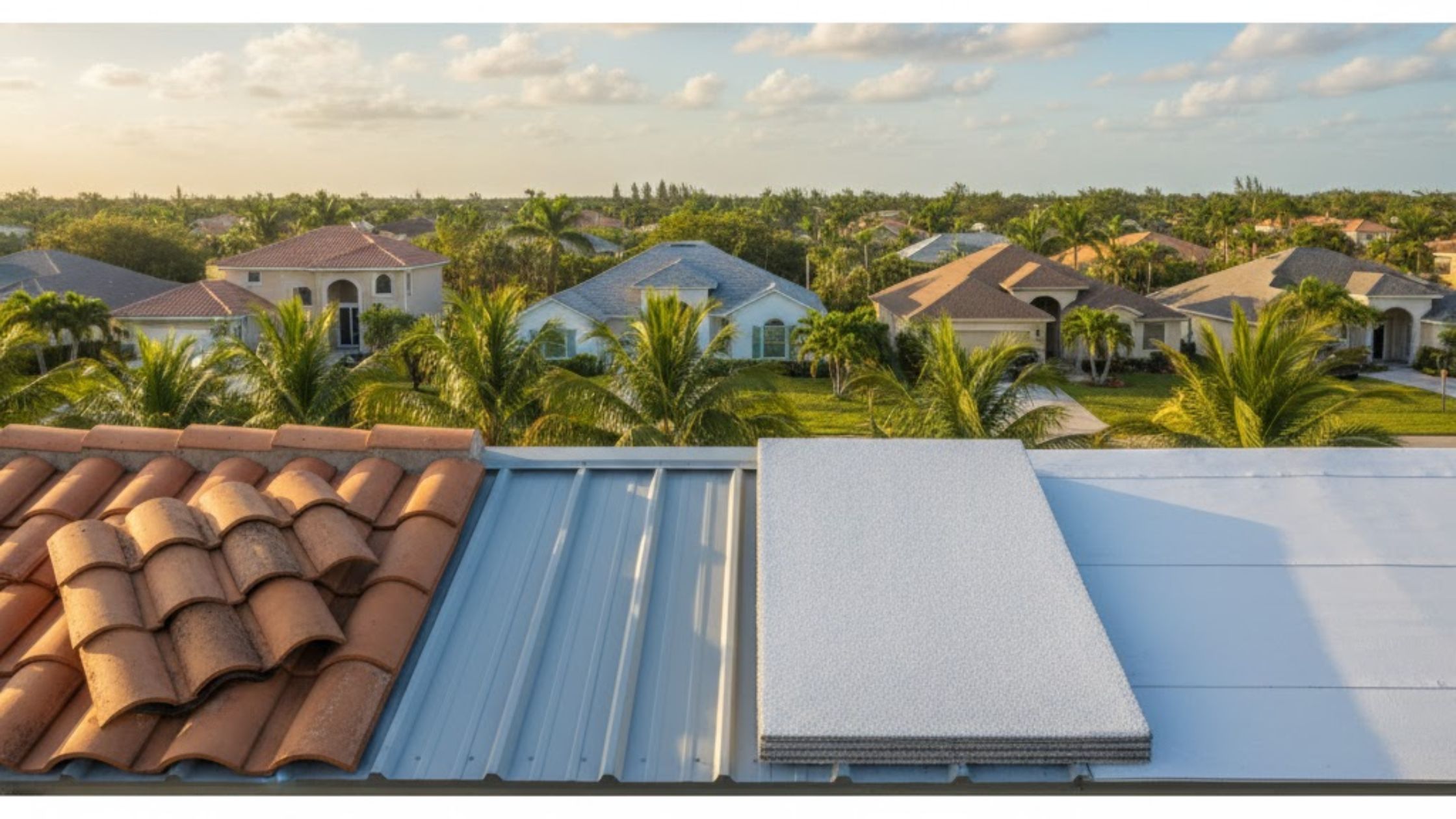
Selecting the correct roofing system is arguably the most impactful decision of the whole process. For commercial facilities, the best material maximizes energy efficiency, provides superior waterproofing, and stands up to the severe weather unique to the Tampa Bay region.
The Rise of Single-Ply Membranes
Single-ply membranes are the dominant choice for low-slope and flat roof replacement timeline projects in the commercial sector today. These systems offer outstanding performance against the intense Florida heat and humidity.
- TPO (Thermoplastic Polyolefin): TPO is highly popular due to its heat-reflective surface, which significantly reduces cooling costs by reflecting solar energy. Its seams are heat-welded, creating a monolithic, watertight bond that is extremely durable.
- PVC (Polyvinyl Chloride): Similar to TPO, PVC offers excellent resistance to fire, chemicals, and industrial pollutants, making it a common choice for restaurants or manufacturing facilities where grease or chemical exhaust might interact with the roof surface.
- EPDM (Ethylene Propylene Diene Monomer): Often referred to as "rubber roofing," EPDM is a durable, dark membrane known for its elasticity and longevity. While it absorbs more heat than TPO or PVC, its resistance to weathering and hail damage is superb.
Traditional and Alternative Systems
While single-ply is common, other robust systems are often specified for their specific benefits in commercial reroof process FL projects.
- Modified Bitumen (Mod-Bit): An asphalt-based product reinforced with fiberglass or polyester. It is installed in layers and can be applied using torch-welding (for high durability) or cold adhesives (for safer application), offering excellent waterproofing.
- Metal Roofing: For commercial properties with a steep pitch, standing seam metal is a premier choice. Metal systems offer exceptional durability, a lifespan of 40 to 60 years, and inherent resistance to high winds and fire.
- Protective Coatings: High-performance acrylic or silicone coatings can be applied over existing, sound membranes (a restoration rather than a replacement), but in the context of a full reroof, they are often used as a final, reflective top-layer to enhance durability and energy performance.
Project Management, Safety, and Minimizing Business Disruption
A successful commercial roof replacement hinges on superior project management that coordinates the logistics of materials, labor, and safety while aggressively minimizing the impact on the client’s operations. CB Roofing Solutions understands that business continuity is paramount.
Site Logistics and Safety Coordination
The work site for a reroof is often a congested area requiring strict control over access and activities. Safety and efficient material handling must be the top priorities.
- Material Staging: Large quantities of insulation boards, membrane rolls, and fasteners must be stored on or near the property. The contractor must coordinate timely deliveries and use cranes to lift materials directly onto the roof deck, often scheduling this during off-hours to avoid disrupting the workday.
- Access Control: Safety perimeters are established on the ground and on the rooftop. This includes warning lines, guards, and supervised access points to prevent unauthorized personnel, employees, or customers from entering the active work zone.
- Noise and Odor Management: Roofing work generates significant noise, particularly during the roof tear off Tampa phase and when using mechanical fasteners. The project manager will communicate the noisiest days in advance to allow tenants or staff to adjust schedules accordingly. The use of certain materials or adhesives may also generate temporary odors that require advance notice.
The Role of the Dedicated Project Manager
A commercial reroof requires a single point of accountability to manage communication, scheduling, and problem-solving. This is the project manager’s central responsibility.
- Daily Communication: The project manager acts as the primary liaison between the crew, the material suppliers, and the property owner, providing daily updates on progress, expected disruptions, and any necessary changes to the schedule.
- Quality Assurance: This individual is on-site to ensure that every step of the installation, from insulation placement to seam welding and flashing details, adheres precisely to the manufacturer’s specifications and the requirements of the Florida Building Code.
- Unforeseen Challenges: On a large, older building, unexpected issues like deteriorated structural components or hidden water damage can arise. The project manager is responsible for immediately alerting the owner, providing documentation, and proposing a solution before proceeding, minimizing delays and cost overruns. For any questions about the process or logistics, please contact us directly.
Installation of the New System and Final Inspections

Once the foundation is sound, the installation phase begins, progressing rapidly to ensure the building is weatherproofed as quickly as possible. This is where the skill of the installers and the quality of the selected materials come together.
Laying the Insulation and Vapor Barrier
Proper insulation is essential in Tampa, serving not only to maintain interior temperatures but also to protect the roof deck and structural components from thermal stress.
- Vapor Management: A vapor barrier may be installed before the insulation to control the flow of moisture from the interior of the building into the roof assembly, which is a major concern in high-humidity areas like Florida.
- Insulation Installation: Rigid insulation boards, such as polyisocyanurate (polyiso), are mechanically fastened or adhered to the roof deck. The R-value of the insulation is determined during the design phase to meet or exceed local energy codes.
- Layering: Multiple layers of insulation, staggered or layered, are often used to achieve the desired R-value and to ensure that all joints are offset, eliminating gaps where thermal bridging (heat transfer) could occur.
Membrane Application and Critical Flashing Details
The installation of the waterproofing membrane is the most important component of the commercial reroof process FL. This step includes securing the field membrane and correctly sealing all vulnerable termination points.
- Field Installation: Large rolls of membrane (TPO, PVC, etc.) are unrolled and secured, often using mechanical fasteners and plates hidden beneath the membrane itself or fully adhered with specialized industrial adhesive.
- Seam Welding: For thermoplastic membranes like TPO, specialized equipment is used to hot-air weld the seams, melting the material together to create a molecular bond that is stronger than the material itself. This attention to detail is critical for waterproofing.
- Flashing: Flashing is the system’s most important waterproofing element, installed around all roof penetrations: HVAC units, vents, pipes, skylights, and parapet walls. This involves meticulously cutting and welding membrane pieces or using custom metal components to divert water away from sensitive areas.
Phase 8: Clean-up and Final Sign-Off
The project is not complete until the entire site is restored to its pre-construction condition and the work has passed all regulatory and quality inspections.
- Thorough Clean-up: All residual materials, fasteners, debris, and packaging are removed from the roof surface, gutters, and ground-level staging areas. A full magnetic sweep is performed to ensure no sharp metal objects or fasteners remain on the ground that could pose a hazard to tires or pedestrians.
- Municipal Final Inspection: The local building inspector visits the site to verify that the installation strictly meets all standards defined by the Florida Building Code and the approved permit drawings.
- Manufacturer’s Inspection: For commercial systems, the manufacturer often sends a representative to inspect the installation before issuing the material and system warranties. This final quality check ensures the long-term performance guarantees are upheld. By partnering with CB Roofing Solutions, you gain the assurance of both local expertise and manufacturer backing.
Long-Term Value and Frequently Asked Questions about Flat Roof Replacement Timeline
A new commercial roof system, when properly installed by a licensed contractor, provides substantial value that extends far beyond simple leak prevention. It contributes directly to operational efficiency, property value, and compliance with modern standards.
Maximizing Energy Efficiency and Sustainability
The new generation of commercial roofing materials is designed with sustainability and energy performance in mind, offering significant savings over older, darker systems.
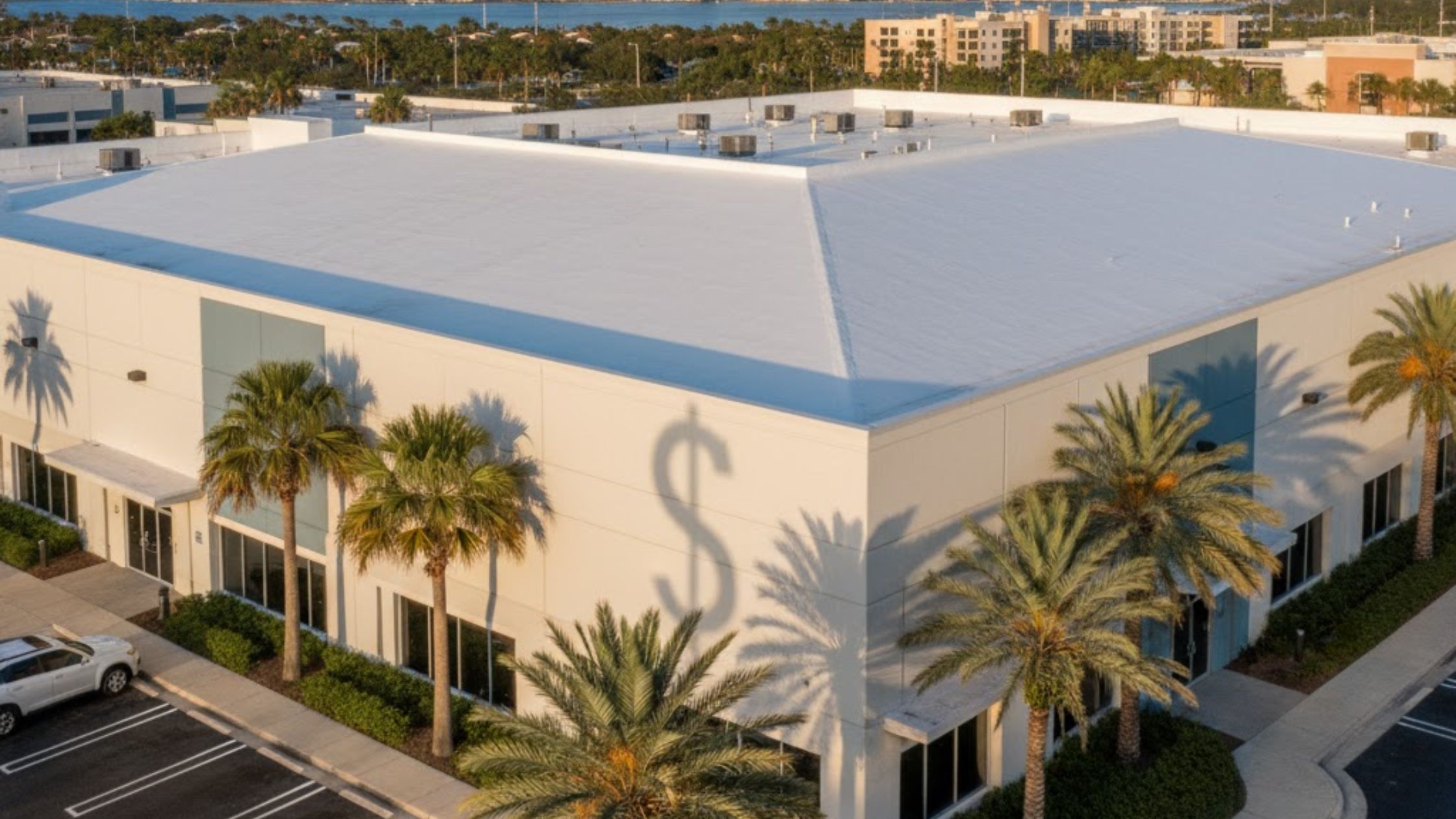
- Reflective Surfaces: White or light-colored membranes (Cool Roof Technology) reflect up to 80% of the sun’s UV radiation, preventing heat gain and dramatically lowering the interior temperature. This reduces the load on the HVAC system, lowering costs.
- High-Value Insulation: Modern insulation materials, as required by the FBC, provide superior thermal resistance (R-value), minimizing energy transfer and creating a more stable, comfortable environment inside the building for employees and tenants.
- Longevity and Warranties: Investing in high-quality systems translates directly to extended life expectancy. A new TPO or PVC roof, properly maintained, can easily last 25 to 30 years, significantly reducing your total cost of ownership over time.
Navigating the Commercial Reroof Warranty
The warranty is a crucial component of the roof replacement investment. Commercial warranties typically come in two forms, which are often layered for maximum protection.
- Manufacturer’s Material Warranty: This covers defects in the physical roofing materials (e.g., TPO membrane integrity, coating failure). These warranties are often long-term, lasting 20 or more years.
- Contractor’s Workmanship Warranty: This covers the quality of the installation, including seam welding, flashing, and proper fastening. A reliable contractor will offer a generous workmanship warranty, standing behind the quality of their work.
Frequently Asked Questions (FAQs)
Here are some common questions property managers and owners ask regarding commercial roof replacement projects:
How long does a typical commercial reroof project take from start to finish?
The typical flat roof replacement timeline for a commercial property ranges from four to eight weeks, depending on the building's size and complexity. This estimate includes the mandatory permitting time (which can take several weeks), the on-site demolition, the installation, and the final inspections. An accurate estimate can only be provided after the initial inspection determines the exact scope of the roof tear off Tampa required.
Will the commercial roof replacement process disrupt my business operations?
While some disruption is unavoidable, a professional contractor works diligently to minimize the impact on your business. This is achieved through careful planning, staging materials away from high-traffic areas, coordinating noisy work (like tear-off) during non-peak hours, and maintaining clear communication with tenants and staff throughout the duration of the commercial reroof process FL.
What type of commercial roof system is best suited for the extreme Tampa weather conditions?
For low-slope or flat commercial roofs in the Tampa area, single-ply membranes like white TPO (Thermoplastic Polyolefin) or PVC (Polyvinyl Chloride) are generally recommended. Their light color reflects intense UV rays, reducing heat gain, and their heat-welded seams provide superior resistance to heavy, wind-driven rain, offering exceptional performance against Florida's volatile climate.
How much does commercial roof replacement cost in Tampa, FL?
The cost of commercial roof replacement varies significantly based on factors such as the existing system that needs to be removed, the total square footage, the number of penetrations (HVAC units, pipes), and the chosen replacement material. A full, detailed inspection is required to generate an accurate, all-inclusive budget, but costs are generally quoted per square foot of roof area, taking into account the required insulation and code compliance upgrades.
Is a full roof tear off Tampa always necessary for a commercial replacement?
A full roof tear off Tampa is required if the existing roof deck is significantly damaged (rotted or saturated with water) or if there are already two or more roofing layers present. While some building codes allow for a second roof to be installed over a structurally sound existing layer, removing all old material provides a clean slate, ensures maximum longevity, and allows for thorough deck and insulation inspection.
Final Words
The protection of your commercial assets starts at the very top of your building, and a successful replacement project hinges on a proactive approach and choosing the right partner. Investing in a compliant, high-performance system for your facility is a critical long-term decision. By choosing a dedicated expert in Tampa Commercial Roofing, you ensure your investment is sound, your property is safe, and your business operations can continue without unnecessary interruption. We pride ourselves on the meticulous planning and execution that delivers reliable results, and we encourage you to check our case studies and testimonials. If you are ready to secure the future of your commercial facility, CB Roofing Solutions is prepared to guide you through every step, providing clear, concise communication and exceptional craftsmanship.

Chad started CB Services in 2010, inspired by his volunteer work after Hurricane Andrew to provide trusted roofing for the Tampa Bay community.